Selecting an amphibious excavator in Nigeria requires more than choosing an excavator by tonnage. Dredging, drainage-channel construction, swamp clearing, flood-control work and oil-and-gas projects may involve soft soil, shallow water and difficult site access. The carrier, pontoon undercarriage, boom, attachment and transport plan must therefore be evaluated as one complete system.
This guide is intended for contractors, equipment distributors and project procurement teams that need a machine configured for specific working conditions.
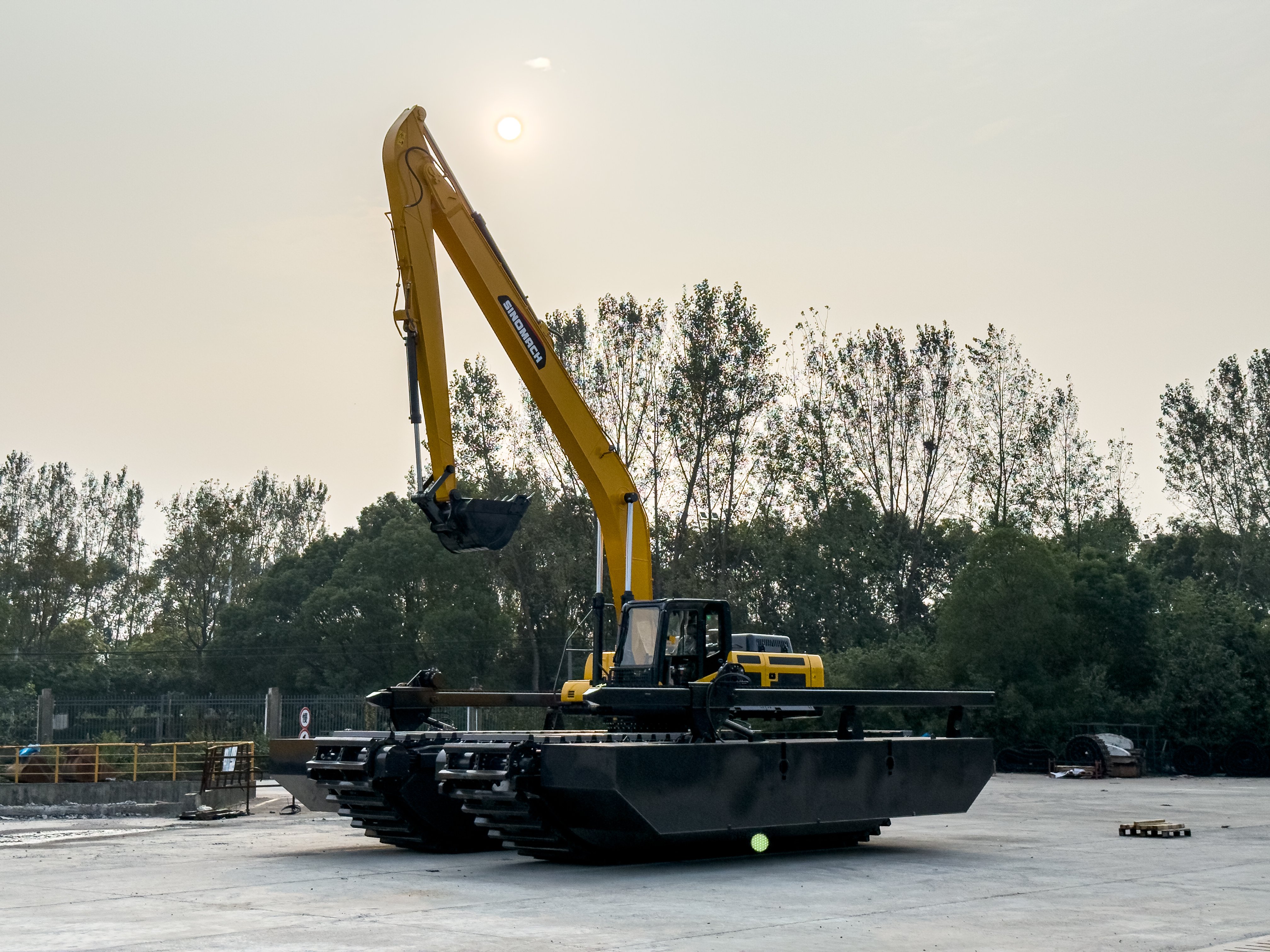
A conventional crawler excavator performs well on stable ground. However, it may lose mobility or become unstable on marshes, wetlands and waterlogged soil.
An amphibious excavator—also commonly called a swamp buggy in Nigeria—uses a wide pontoon-type undercarriage to reduce ground pressure and improve mobility on soft terrain. Typical applications include:
Canal and drainage-channel maintenance
Swamp and wetland excavation
Riverbank and shoreline work
Flood-control and erosion-control projects
Land reclamation
Pipeline right-of-way preparation
Shallow-water dredging
Vegetation and waterway clearing
An amphibious configuration is not automatically suitable for every water operation. Water depth, current, soil strength, tide, wave conditions and excavation radius must be assessed before the final equipment configuration is approved.
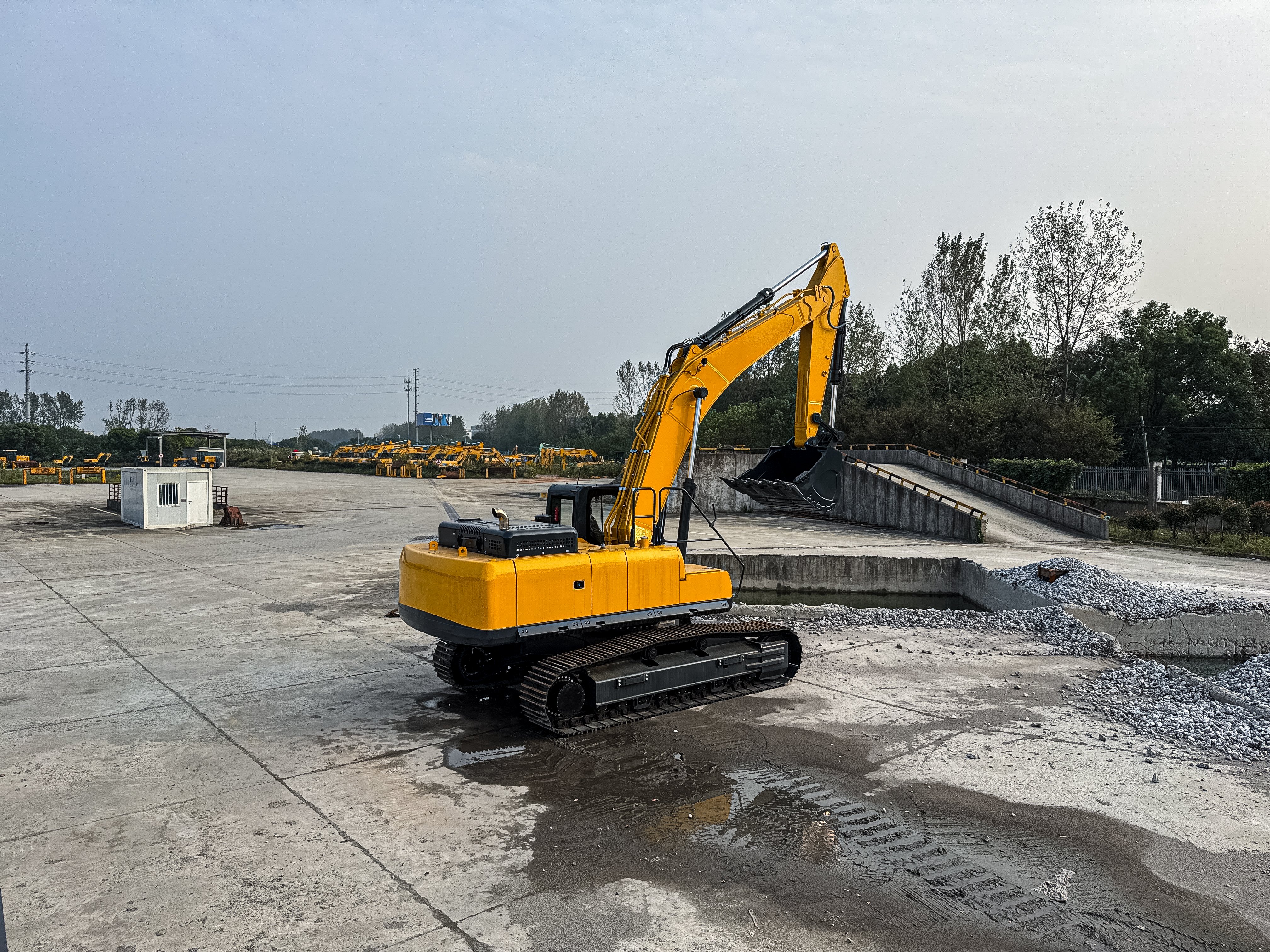
Before asking for a quotation, the buyer should prepare accurate project information. A supplier cannot safely recommend a machine based only on the words “swamp project” or “dredging work.”
Important information includes:
Exact project location
Type of work to be completed
Water depth and expected seasonal change
Soil or dredged-material condition
Required digging depth and working radius
Expected production volume
Bank slope and access conditions
Required attachment
Daily operating hours
Project duration
Mobilisation and transport limitations
Photographs, videos, drawings and soil information can help the engineering team understand the site. For large projects, a technical meeting should be arranged before confirming the equipment.
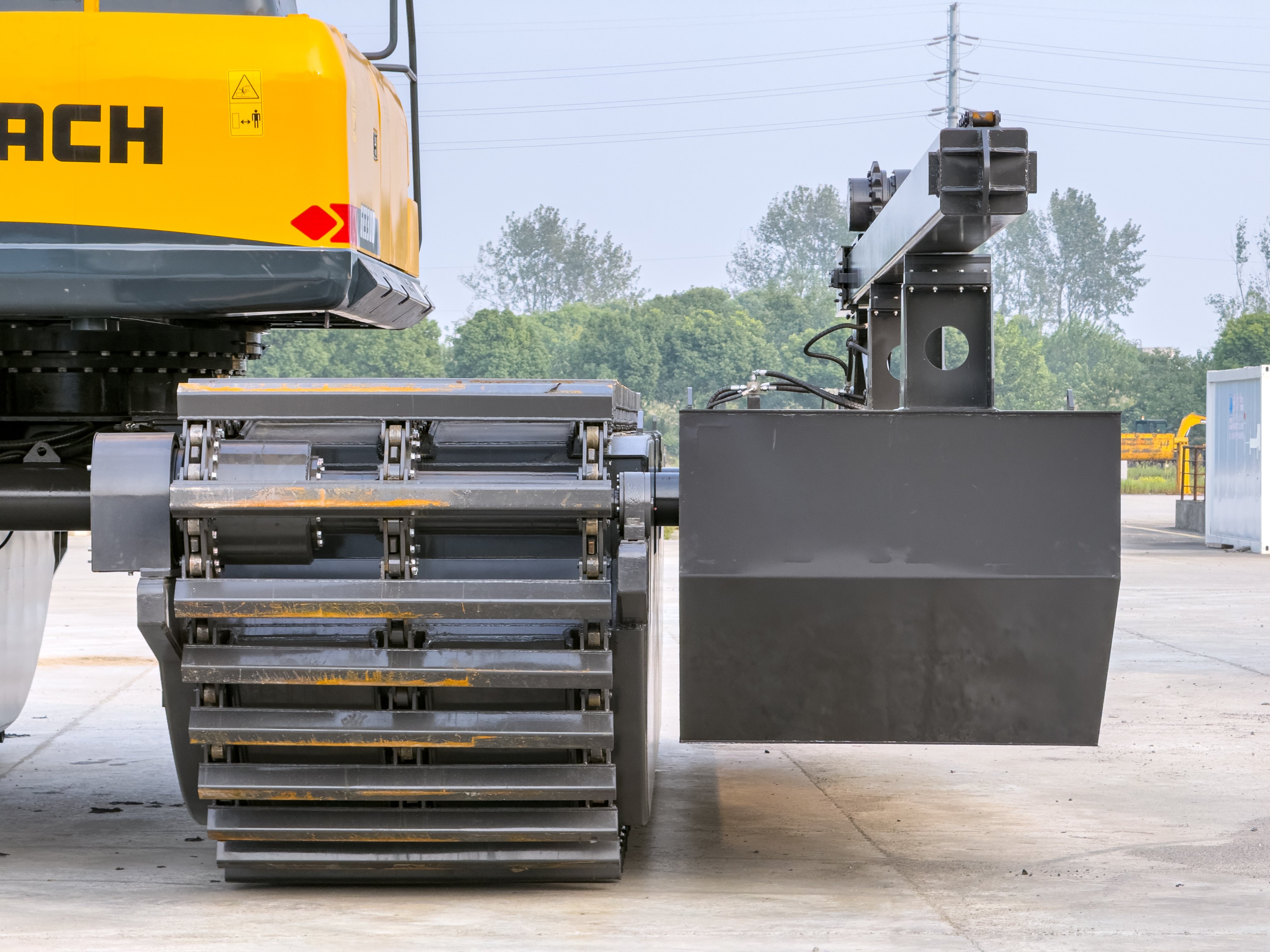
The excavator carrier and amphibious undercarriage must be compatible. The carrier’s weight, centre of gravity, hydraulic system and upper structure influence the complete machine’s stability and productivity.
The pontoon system should be evaluated for:
Main pontoon dimensions
Track design and travel system
Structural reinforcement
Access for inspection and maintenance
Side-pontoon requirements
Spud or stabiliser options
Corrosion protection
Assembly and disassembly arrangements
Wider pontoons or additional stabilising components may improve stability in certain conditions, but they also affect shipping dimensions, weight and mobilisation. The final selection should be based on an engineering assessment rather than a standard catalogue image.
A standard boom may be suitable for shallow excavation close to the machine. A long-reach boom can extend the digging radius and depth, but additional reach changes the machine’s lifting capacity and stability.
For a long-reach excavator for dredging, the buyer should define:
Required horizontal reach
Maximum digging depth
Expected bucket capacity
Material density
Required discharge location
Whether the machine works from the bank, pontoon tracks or a platform
A longer boom is not always more productive. Excessive reach may require a smaller bucket and slower working cycles. The most efficient configuration balances reach, stability and bucket capacity.
Different projects require different attachments.
A dredging or ditch-cleaning bucket may be suitable for soft sediment and canal maintenance. A heavy-duty bucket may be needed for compacted material. A rake or grapple can assist with vegetation and debris removal, while a hydraulic cutter or pump may be considered for specialized projects.
Attachment selection must account for:
Material type and density
Bucket width and capacity
Required hydraulic flow and pressure
Attachment weight
Pins, brackets and coupler dimensions
Replaceable wear parts
The attachment should be confirmed together with the carrier and boom—not purchased as an unrelated component.
Amphibious equipment works in environments where ground and water conditions can change quickly. A machine that operates safely in shallow, still water may not be suitable for deep water, strong current, waves or an unstable excavation edge.
Before mobilisation, the contractor should complete a site-specific risk assessment covering:
Ground-bearing capacity
Water depth and current
Tide or rainfall changes
Safe travel and working routes
Maximum permitted working radius
Overhead and underwater obstacles
Emergency recovery arrangements
Operator training and communication
Daily machine inspection
The machine must be operated within the manufacturer-approved configuration and limits. An amphibious undercarriage should never be treated as a guarantee that the excavator can work in every water condition.
A swamp buggy excavator in Nigeria may require separate transportation of the carrier, pontoons, side pontoons, boom and attachments. Low-bed trailers, cranes and suitable assembly space may be required at the destination.
Before shipment, confirm:
Largest transport dimensions and weights
Container, break-bulk or other shipping requirements
Nigerian destination port
Inland transport route
Crane capacity for assembly
Assembly tools and personnel
Commissioning and operator training
Spare-parts package
Considering mobilisation during the purchasing stage helps prevent unexpected costs and project delays.
Mud, sand, water and vegetation can accelerate wear. Daily cleaning and inspection are especially important for the track system, pontoon compartments, pins, bushings, hoses and attachment connections.
A project spare-parts package may include:
Filters and routine service parts
Hydraulic hoses and seals
Pins and bushings
Bucket teeth and cutting edges
Track-system wear components
Recommended tools and consumables
The package should reflect the project duration, operating hours and distance from service support.
A standard configuration may not meet every drainage, dredging, pipeline or reclamation project. A custom amphibious excavator may be useful when the buyer requires a specific working reach, attachment, undercarriage arrangement, transport solution or special protection.
Supported by SINOMACH manufacturing and engineering resources, Dingsheng Tiangong can evaluate OEM and ODM requirements for special working conditions. The final proposal may cover the excavator, amphibious undercarriage, boom, attachment, hydraulic matching, spare parts and mobilisation requirements as one system.
Customization should begin with verified project data. It should not be based solely on appearance or an unconfirmed specification list.
Before requesting a technical proposal, provide:
Company name and website
Project name and location in Nigeria
Main contractor or project owner, where applicable
Water depth and soil conditions
Required digging depth and reach
Material to be excavated
Equipment quantity
Expected working hours and project duration
Required attachments
Destination port and required delivery date
The correct amphibious excavator in Nigeria depends on the site, water conditions, required reach, material, attachment and mobilisation plan.
Dingsheng Tiangong supplies construction machinery and evaluates OEM and ODM solutions for demanding projects. For a technical recommendation and quotation, please provide your company name, project location, water depth, soil conditions, required working reach, equipment quantity, destination port and expected purchase date.
 EN
EN
 AR
AR
 FR
FR
 DE
DE
 IT
IT
 PT
PT
 RO
RO
 RU
RU
 ES
ES
 TL
TL
 LV
LV
 LT
LT
 UK
UK
 VI
VI
 BN
BN
 LA
LA
 MY
MY
 KK
KK