Not every project can be built with a standard machine. A contractor dredging a river, a quarry working in abrasive rock, a mining site that needs a specific attachment, or a dealer who wants machines under their own brand — each of these needs more than a catalogue. They need an OEM construction equipment supplier in Nigeria who can build the machine around the job.
This guide explains how OEM and ODM equipment projects actually work in Nigeria: when customisation is worth it, the steps from enquiry to delivery, what you need to prepare, and how to keep quality and after-sales under control on a machine that is not a standard model.
Customisation adds cost and time, so it should always answer a specific problem. The clearest cases in Nigeria:
If your requirement is a standard machine used for standard work, the faster and cheaper route is a catalogued model. Customisation is for the cases where a standard machine genuinely does not fit.
The two terms are often used together, so it is worth separating them:
For most Nigerian projects, an ODM approach on a proven platform — adjusted attachments, protection package or configuration — delivers the benefit of customisation without the risk of an unproven design. A good manufacturer will tell you honestly which route your requirement needs.
A professional custom project follows a predictable path. Knowing it helps you judge whether a supplier is serious:
Any supplier who skips straight to "yes" without a technical review is a supplier worth questioning.
The quality of the answer you get depends on the quality of the brief you send. Prepare:
Suppliers who receive this information can respond with a real technical proposal. Suppliers who receive only "send me your best price" can only send a catalogue.
On a custom machine, quality is a process, not a final inspection. Ask how the supplier controls it:
Documentation matters for customs, for tenders and for resale, so settle it in the contract rather than at delivery.
A custom machine introduces one risk that standard purchases do not: parts and service for a configuration nobody else has.
Handle it in the same conversation as the order:
If you run quarry and aggregate projects, the same discipline applies: a machine is only an asset if it can be kept running.
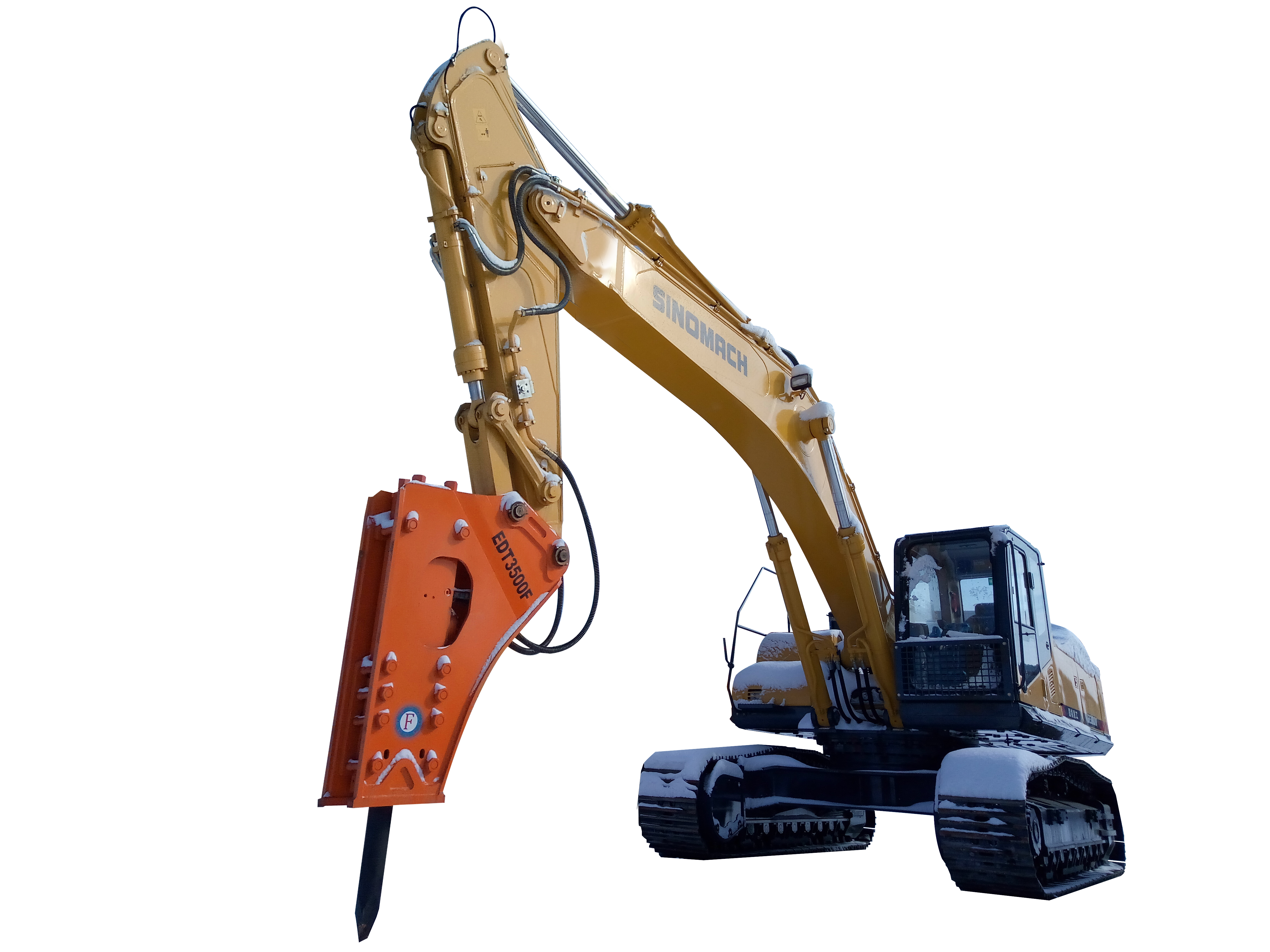
Many OEM/ODM enquiries in Nigeria start with an attachment: a bucket for an unusual material, a hydraulic attachment, a long-reach configuration, or a machine adapted for water work. Attachments are where custom machinery delivers the fastest return, because they let one carrier machine do work that would otherwise need a second machine. The principles for matching attachments to the job are covered in our excavator attachments guide.
If your requirement begins as a standard machine purchase, it is worth comparing the standard options first — our wheel loader selection guide explains how duty cycle and material drive specification.
For a dealer, the value of an OEM partner is not one order — it is the next five years. When assessing a manufacturer, look for:
Dingsheng Tiangong, backed by SINOMACH manufacturing resources, supplies construction equipment to export markets and supports OEM, ODM and customised configurations — including packaged equipment supply for quarry, mining and infrastructure projects.
Contact Dingsheng Tiangong for a project-specific OEM or custom equipment recommendation. Please provide your company name, project location, required equipment and configuration, quantity, working conditions, destination port and expected purchase date — together with your site material type, required attachment and any brand or documentation requirement. Our team will respond with a technical proposal.
 EN
EN
 AR
AR
 FR
FR
 DE
DE
 IT
IT
 PT
PT
 RO
RO
 RU
RU
 ES
ES
 TL
TL
 LV
LV
 LT
LT
 UK
UK
 VI
VI
 BN
BN
 LA
LA
 MY
MY
 KK
KK