Heavy Equipment for Mining Projects in Nigeria: How to Plan and Specify Your Fleet
Mining is the hardest duty cycle in construction equipment. Machines run loaded, run long shifts, and work in abrasive material that wears buckets, tracks and tyres faster than any road job ever will. Planning heavy equipment for mining projects in Nigeria therefore starts with production targets and working conditions — not with a machine list.
This guide is written for mining companies, mining contractors and project buyers who need to specify a fleet: what each machine does, how to match the fleet to output, what changes when the duty is mining, and how to plan expansion and support so the fleet still performs in year five.
How mining fleets differ from quarry and earthworks fleets
A mine shares machines with a quarry or an earthworks project, but the planning logic is different:
-
Scale and duty — mining machines run near-continuous shifts with fewer recovery windows; reliability matters more than peak performance.
-
Material abrasiveness — blasted rock, ore and overburden wear ground-engaging tools and undercarriage far faster.
-
System dependency — one loading machine can bottleneck an entire haulage cycle; the fleet must be balanced, not just powerful.
-
Lifecycle planning — mines plan in phases; equipment bought for phase one has to fit the fleet in phase two and phase three.
Matching the fleet to production targets
Before choosing machines, define the numbers that will govern the fleet:
- target output (tonnes per day or per shift);
- working hours per day and the number of productive shifts;
- material type and density;
- haul distance and road conditions;
- loading method (excavator at the face, loader at stockpile, or both);
- the truck fleet the loaders must match.
With these figures, the fleet becomes an arithmetic problem rather than a preference. A supplier should be able to tell you how many loading units and support machines your target requires — and where the bottlenecks will appear if you buy fewer. If a proposal does not reference your production targets, it has not been planned.
Core machine roles on a mining site
Most mining operations in Nigeria are built around the same machine families:
-
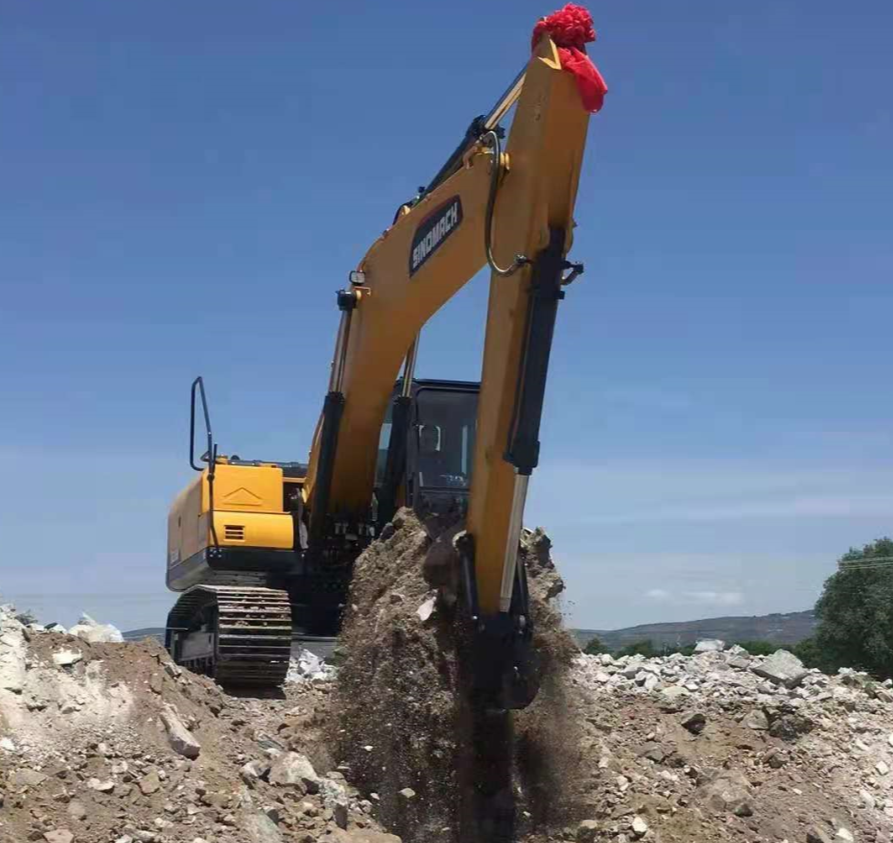
Hydraulic excavators — primary loading at the face, trenching and digging in hard material; the machine whose bucket and boom configuration decides loading cycle time.
-
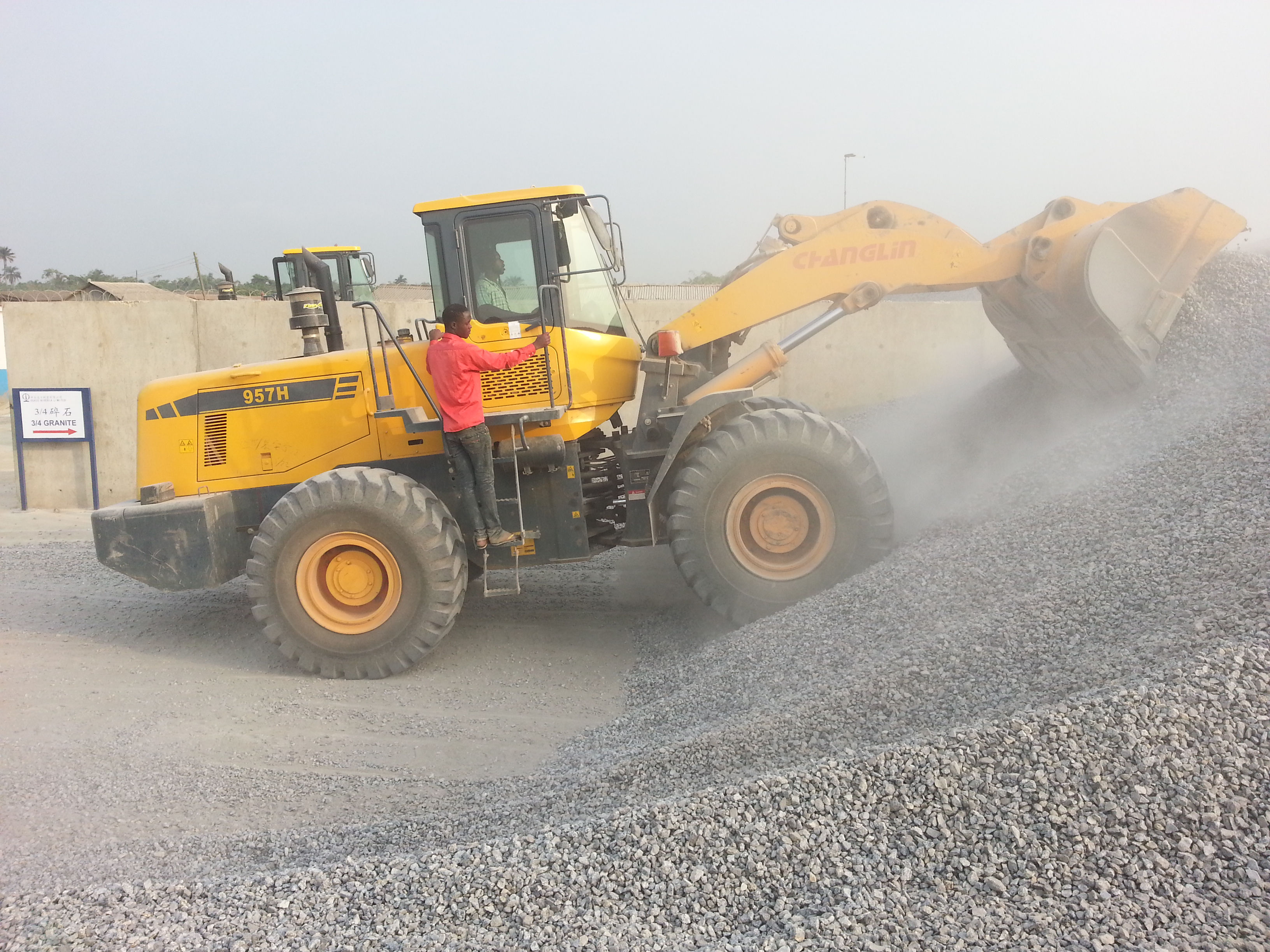
Wheel loaders — stockpile handling, feeding and loading in softer material, plus yard and haul-road assistance. Loader selection follows the same duty logic as our wheel loader guide.
-
Bulldozers — overburden stripping, bench preparation and stockpile dozing.
-
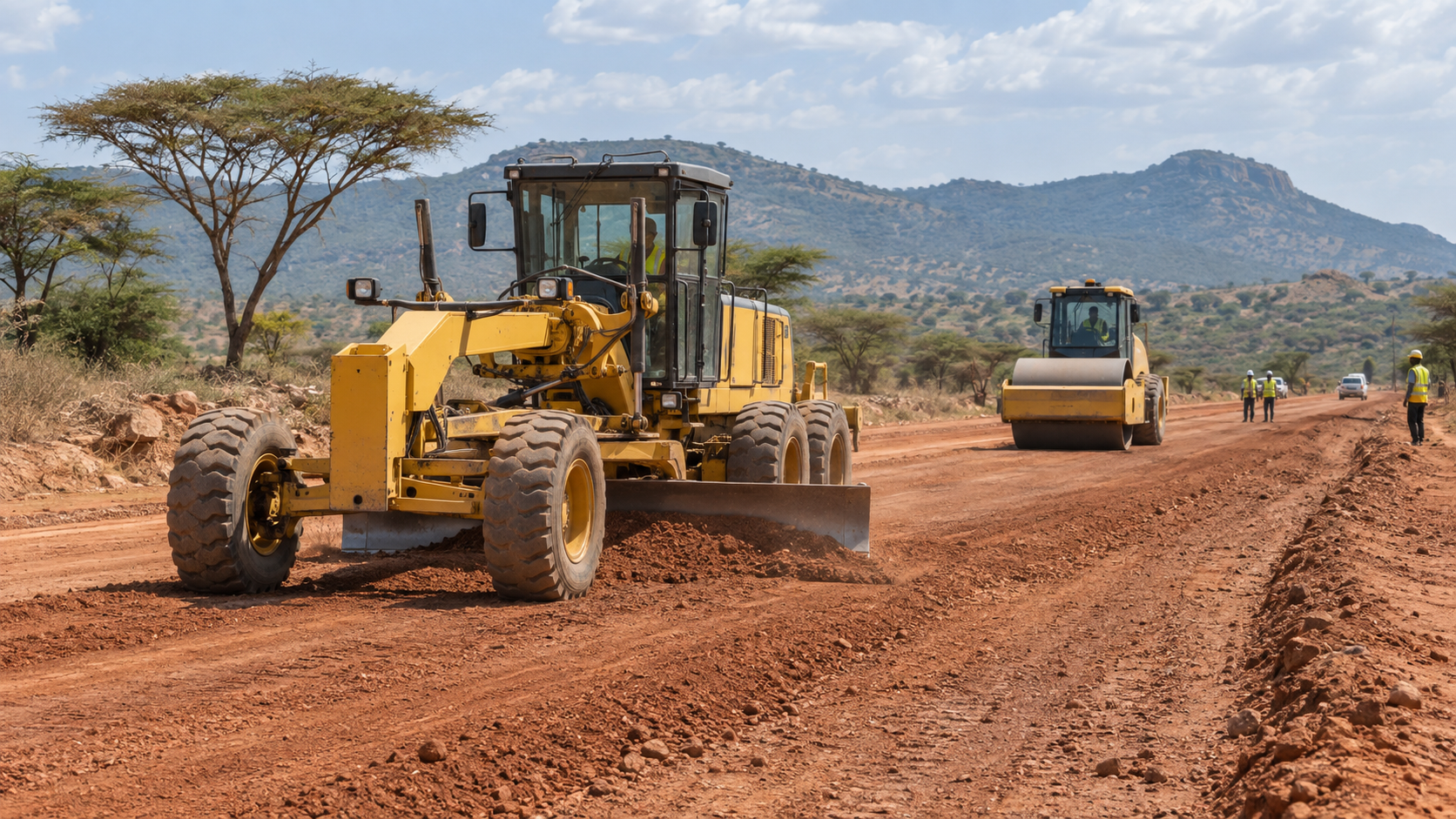
Motor graders — haul road shaping and maintenance, the quiet factor behind cycle times and tyre life across the whole fleet. See our motor grader guide.
-
Rollers — compaction of haul roads, pads and stockpile areas where ground stability matters.
Specifying heavy equipment for mining projects in Nigeria
Mining specification is about surviving the conditions, not just meeting the output:
-
Ground-engaging tools — heavy-duty buckets, teeth and edges matched to the material; the right attachment is often the difference between planned and unplanned stops. Our excavator attachments guide covers how to match them.
-
Undercarriage and tyres — abrasive floors and sharp material demand specification choices that protect the machine's most expensive wear components.
-
Cooling and filtration — high ambient temperatures and heavy dust mean cooling and air filtration must be specified for sustained operation, with sealed cabs protecting the operator.
-
Service access — a mine cannot afford a machine waiting on a routine task; layout, filters and grease points should allow fast daily service.
-
Water and wet pits — where a pit floods or material is dredged, machines such as amphibious excavators change what is possible.
Haul roads and site infrastructure
Cycle time is a function of road condition as much as machine power. Haul roads deteriorate quickly under loaded trucks, and the cost of a bad haul road shows up in tyres, fuel, suspension repairs and reduced truck speed. A grader dedicated to haul road maintenance usually pays for itself in tyre life and cycle time alone.
Plan infrastructure and equipment together: drainage, road width, turning areas and stockpile layout all determine how the fleet performs. Equipment cannot fix a badly planned site, and a well-planned site makes ordinary machines look excellent.
Staged expansion: buying for phase one without blocking phase two
Mining projects rarely stay at their initial size. Buy in a way that supports expansion:
- standardise on platforms and attachments so operators and spares are interchangeable;
- buy loading capacity that can be matched with additional haulage units;
- keep specifications on file with the supplier so phase two machines match phase one;
- plan the parts stock around the whole fleet, not the first machine.
Spare parts, service and operator skills
In mining, availability is the metric. Before the order:
- agree the wear parts and running spares to ship with the fleet;
- confirm the parts route to your site and who manages it;
- agree warranty terms and service response expectations in writing;
- plan operator and maintenance training — mining duty punishes poor operating habits faster than any other application;
- check the supplier's ability to support the fleet over the project's life, using the same criteria as our guide to choosing an excavator supplier for construction companies in Nigeria.
What to include in your enquiry
Give the supplier the information a mining fleet plan needs:
- company name and project location;
- mineral or material, and site conditions;
- target output and working shifts;
- haul distance and road conditions;
- required machine types and quantity, plus expansion plans;
- destination port and expected purchase date;
- any project specification, documentation or certification requirement.
Contact Dingsheng Tiangong for a project-specific mining equipment recommendation. Please provide your company name, project location, required equipment, quantity, working conditions, destination port and expected purchase date — together with your mineral type, target output and haul distance. Our team will respond with a fleet configuration proposal, not a generic price list.

 EN
EN
 AR
AR
 FR
FR
 DE
DE
 IT
IT
 PT
PT
 RO
RO
 RU
RU
 ES
ES
 TL
TL
 LV
LV
 LT
LT
 UK
UK
 VI
VI
 BN
BN
 LA
LA
 MY
MY
 KK
KK