Road Construction Equipment Supplier in Kenya: A Buyer's Guide for Contractors
Road work is a race between programme and weather, and equipment is what decides who wins it. For contractors in Kenya — and for buyers across East Africa working through Mombasa — the right fleet turns a difficult programme into a profitable one, while the wrong one converts every rainy season into lost weeks. Choosing a road construction equipment supplier in Kenya is therefore a commercial decision, not just a technical one.
This guide covers what contractors should think about before buying road equipment: which machines do what, how Kenyan conditions change the specification, how to judge a supplier, and what to settle before the order is placed.
Why equipment planning decides project margin in Kenya
On a road project, most of the cost is in materials, fuel and time. Equipment decisions touch all three:
-
Productivity — a machine matched to the work finishes more metres per shift at lower fuel cost.
-
Availability — downtime during a working window cannot be recovered; rain will take enough days without mechanical failures adding more.
-
Quality — accurate grading and correct compaction prevent rework, which is one of the most expensive forms of waste on a road job.
-
Programme risk — a contractor who owns the right fleet controls the schedule; one who depends on rented or borrowed machines does not.
Matching machines to the road work
Different road activities call for different machines, and most contractors build a fleet around four or five core types:
-
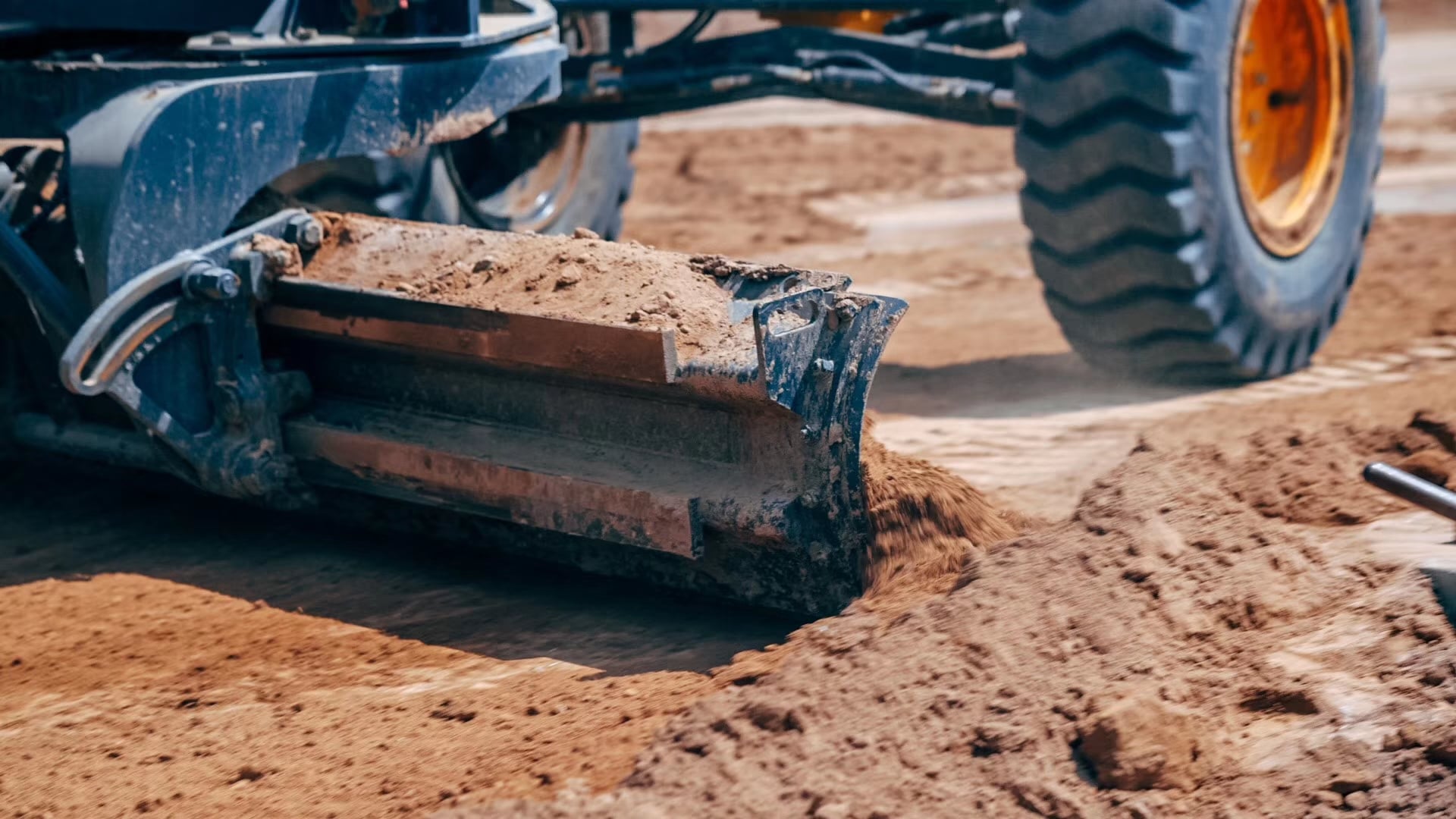
Motor grader — shaping and levelling the subgrade and base course; the machine that decides how much material you save and how flat the finished layer is.
-
Road roller — compaction of subgrade, base and asphalt layers; compaction discipline determines how long the road lasts.
-
Excavator — cut and fill, drainage and structure works, and material loading where a loader cannot reach.
-
Wheel loader — handling aggregate, loading trucks and feeding the works from stockpiles.
-
Bulldozer — clearing, stripping and bulk earthmoving on larger jobs.
Machine sizing should follow the job, not the other way round: a contractor working rural and feeder roads rarely needs the same configuration as one delivering a trunk road with heavy compaction requirements. The selection logic of each machine is explained in our guides to the motor grader and the wheel loader, and applies equally to Kenyan projects.
Site conditions in Kenya: black cotton soil, dust and wet seasons
Kenyan road projects punish equipment that is not specified for local conditions:
-
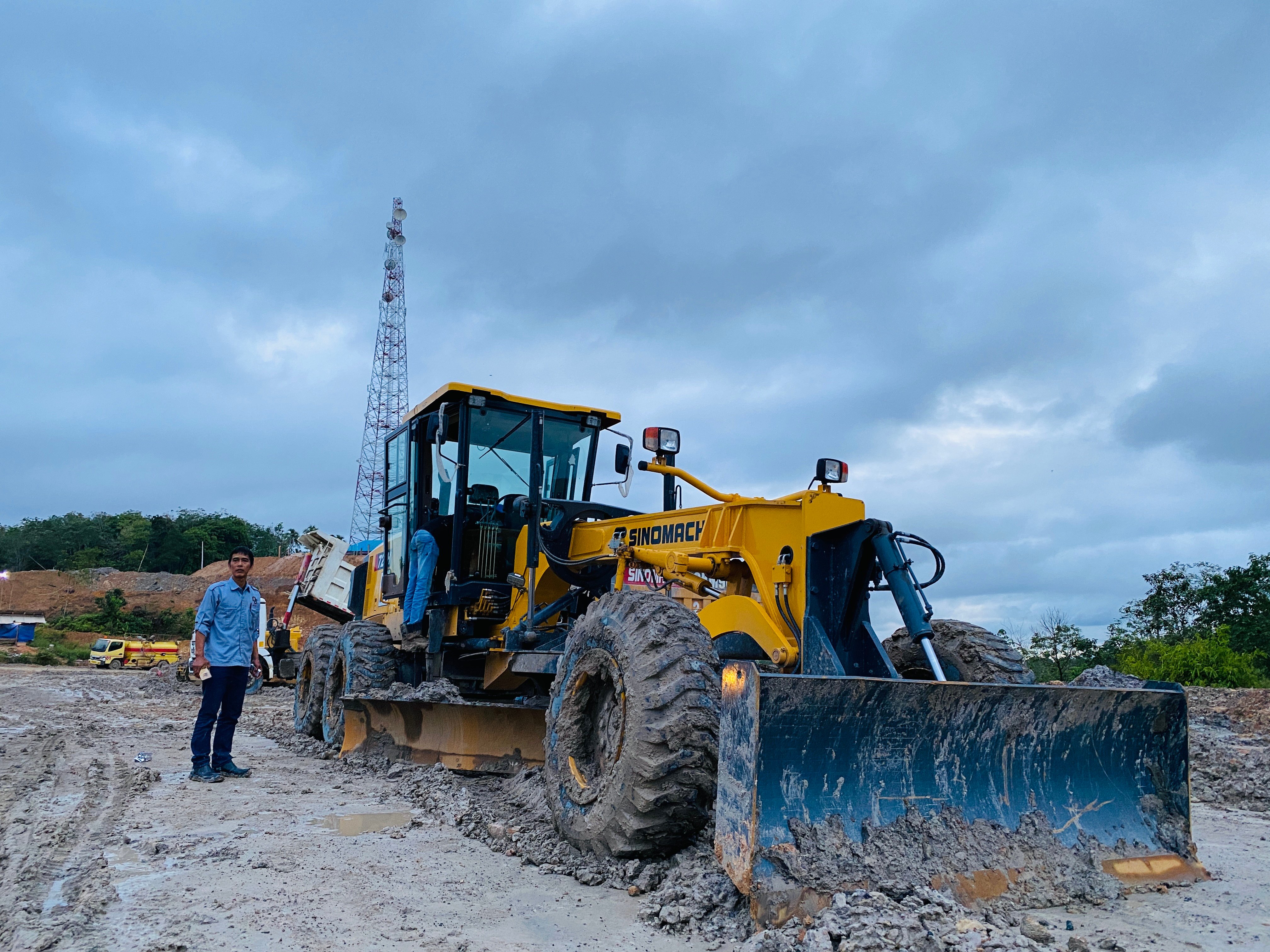
Black cotton soil and soft ground — expansive soils create unstable working platforms; machine weight distribution, tyre choice and drainage planning matter as much as engine power.
-
Dust during the dry season — filtration and cooling systems need to cope with sustained dust; undercarriage and greasing points deserve attention.
-
Heavy rains — site access and haul roads can fail quickly; equipment that can keep working on soft ground, and machines maintained before the rains, protect the programme.
-
Long haulage distances — aggregate and material sources are often far from the works, so load-and-carry efficiency directly affects productivity. Where material comes from quarries and crusher sites, the fleet must be planned as a system, not as individual machines.
Discuss these conditions with your supplier before the specification is fixed. A supplier who asks about soil, seasonality and haul distance is doing the job properly.
Choosing a road construction equipment supplier in Kenya
The supplier decision outlasts the purchase. Compare suppliers on:
-
Manufacturing background — is there a real production base and engineering capability behind the machine?
-
Configuration capability — can the machines be set up for Kenyan conditions and project specifications?
-
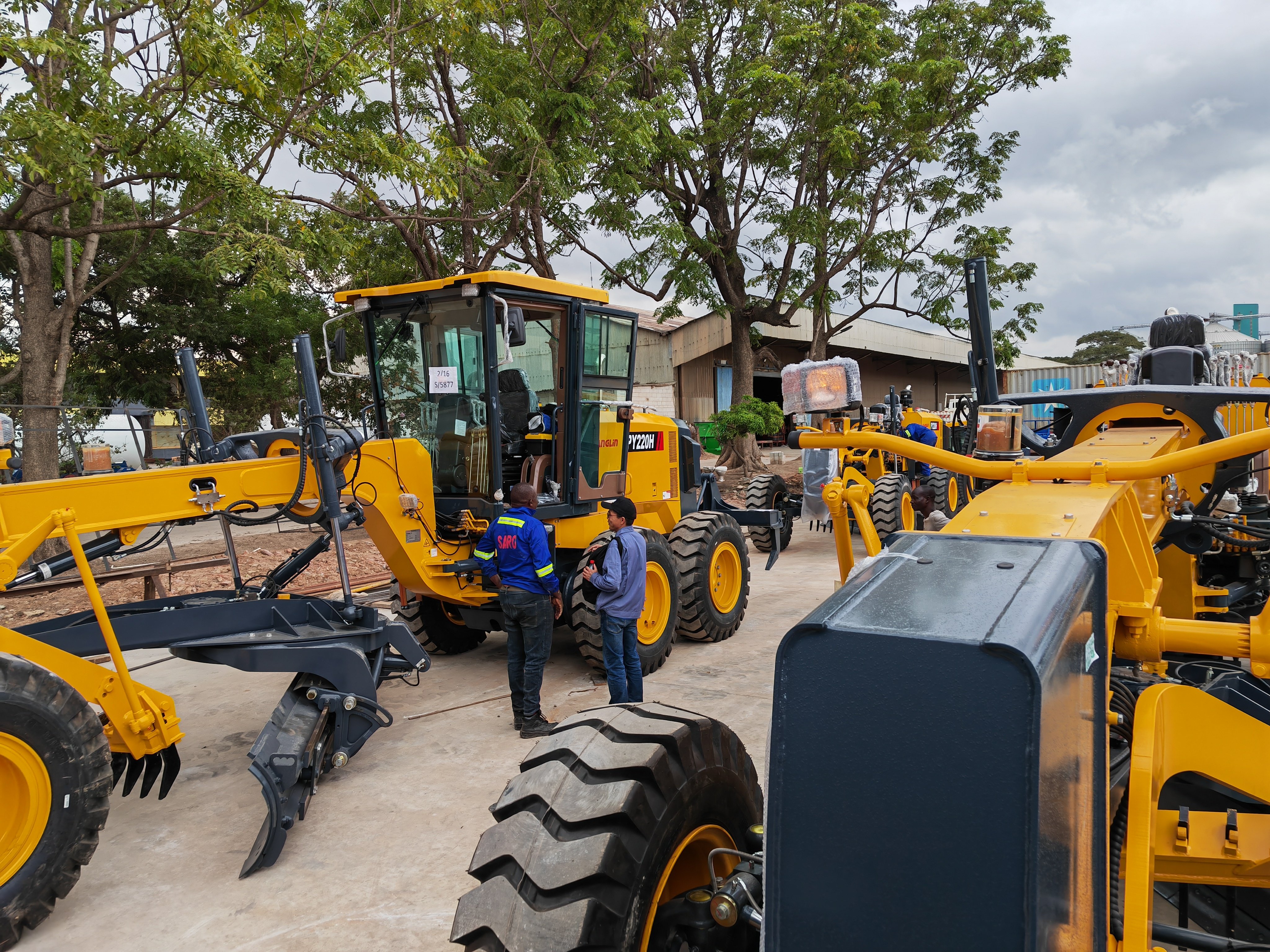
Delivery experience — has the supplier shipped to Mombasa and supported inland delivery before?
-
Spare parts pipeline — how will filters, wear parts and components reach your site in year two and year three?
-
Training and documentation — who trains your operators, and are manuals and parts catalogues provided?
-
References — can the supplier describe similar projects and machine applications?
A supplier who can answer these questions has probably answered them many times before.
Delivery through Mombasa: ports, documents and inland transport
Most imported road equipment enters East Africa through Mombasa. Plan the delivery with your supplier at the same time as the purchase:
- confirm the destination port and the inland route to your site;
- agree which documents are prepared by which party, and when;
- decide who handles offloading, commissioning and handover;
- consider whether machines for regional projects should be consolidated into one shipment.
Buyers in Uganda, Rwanda and South Sudan should note that the same route serves their projects — which makes a supplier with East African delivery experience more valuable than one selling locally only.
Spare parts and service: settle it before you buy
Road fleets live or die on parts availability. Before the order is confirmed:
- agree the recommended running spares to ship with the machines;
- confirm the spare parts route to your site and who manages it;
- agree warranty terms in writing, including what voids cover;
- confirm operator and service training for your team;
- ask the supplier to keep your machine specifications on file for future orders.
Checklist before you place your order
Prepare these details to receive a serious proposal:
- project type and location, and the roads you are constructing;
- work scope: earthworks, base and subbase, asphalt or rehabilitation;
- material sources and haul distances;
- required output per day and working season;
- machine types and quantities you plan to buy;
- destination port and expected purchase date;
- any project specification or documentation requirement.
Contact Dingsheng Tiangong for a project-specific road equipment recommendation. Please provide your company name, project location, required equipment, quantity, working conditions, destination port and expected purchase date — together with your project scope and site soil conditions. Our team will respond with a configuration proposal, not a generic price list.

 EN
EN
 AR
AR
 FR
FR
 DE
DE
 IT
IT
 PT
PT
 RO
RO
 RU
RU
 ES
ES
 TL
TL
 LV
LV
 LT
LT
 UK
UK
 VI
VI
 BN
BN
 LA
LA
 MY
MY
 KK
KK